
Greenland and Nunavut: Inuit Homelands
My second and final Greenland blog
Cruising from Greenland to Nunavut Canada, back to Nuuk and to southern Greenland
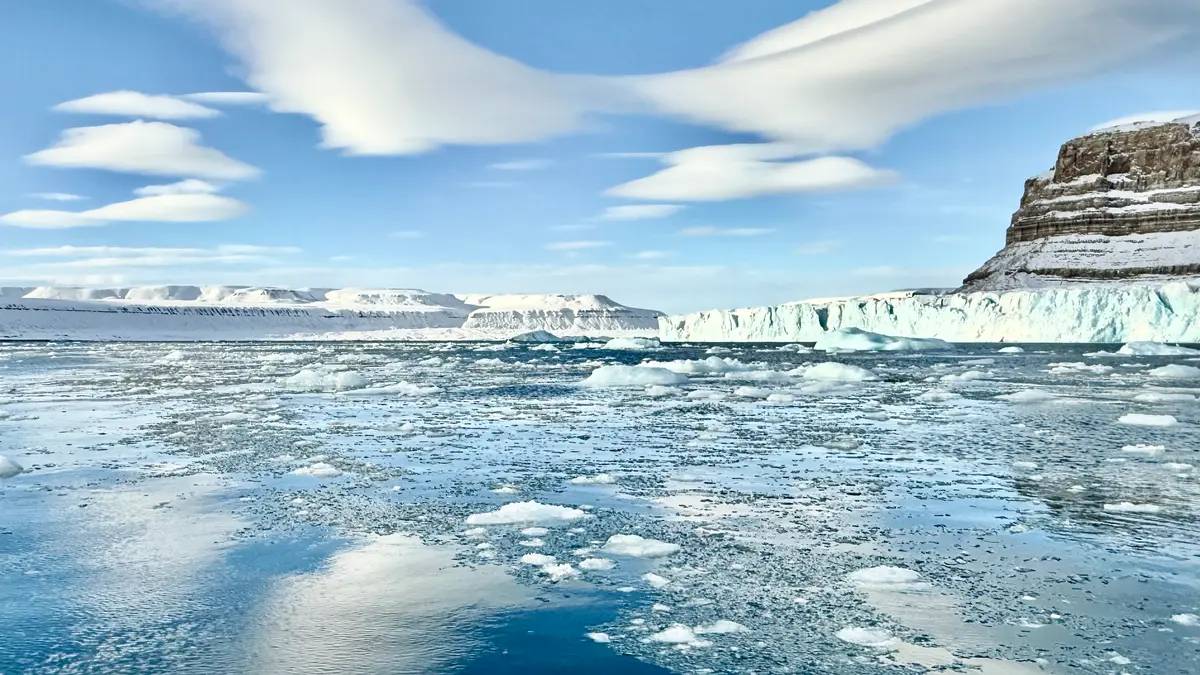
Prior to this cruise, I was totally ignorant about Greenland. Now, after two weeks in the region, I’ve learned so much that I hope I can share a coherent outline of what I’ve learned.
The native Inuit people of Greenland are the descendants of the first humans who traversed the Bering Straits between Siberia and Alaska 4500 years ago when there was a land bridge between Asia and the Americas. Thus, the Inuits identify with other circumpolar tribes, including Aleuts (Alaska) and Sami (Sweden, Finland, Russia). The tribes are linguistically related, as well as sharing the special skills of fishing, hunting, and reindeer herding necessary for survival in the extreme Arctic landscapes.
Though I heard that there are a few trees planted by the colonial Scandinavians, I never personally saw a single tree in Greenland. Agriculture barely exists. Thus, the diets of the Greenlanders is limited to fish, meat, seaweed, and seasonal berries. I questioned a native Inuit: Is it true that there are Greenlanders who never taste a vegetable in their lives? He confirmed that my suspicion was true. We visited the general stores in several of the villages, just to see what was available. There were a variety of fruits and vegetables available for sale. But they are all imported and very expensive. Thus, the native Greenlanders must become skilled hunters and fishermen.
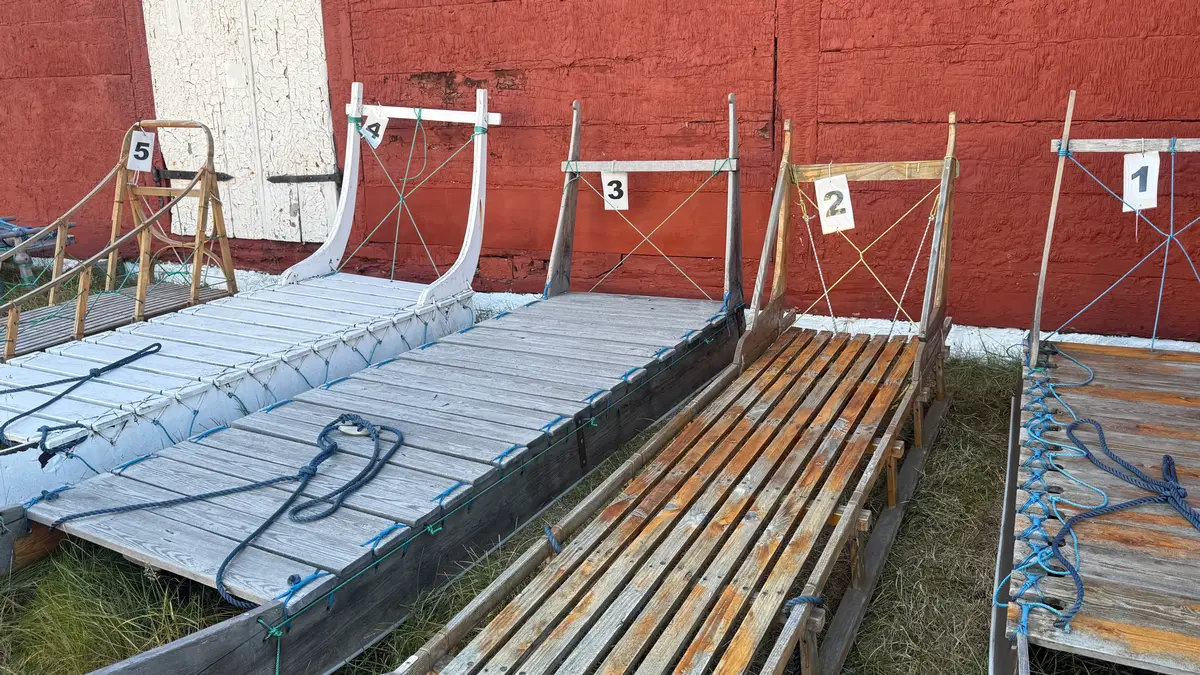
in order to spread the weight of the dogs over the ice.
OUR INUIT GUIDES
We have several native Greenlanders on the staff of our ship. Our native guides in the villages we visited described their lifestyles. A female guide related that she received her first gun at age six. Her target practice consisted of shooting at a poster of Donald Duck. She was told to aim for the head. We just passed the open hunting season, which is in August and September. Kills of polar bears, muskox, and reindeer must be registered to the government in order to maintain records to support herd management. Greenland villagers are also skilled fishermen. Boats far outnumber cars in Greenland. (Roads are only present within the towns and villages. There are no connecting roads in Greenland’s interior.)
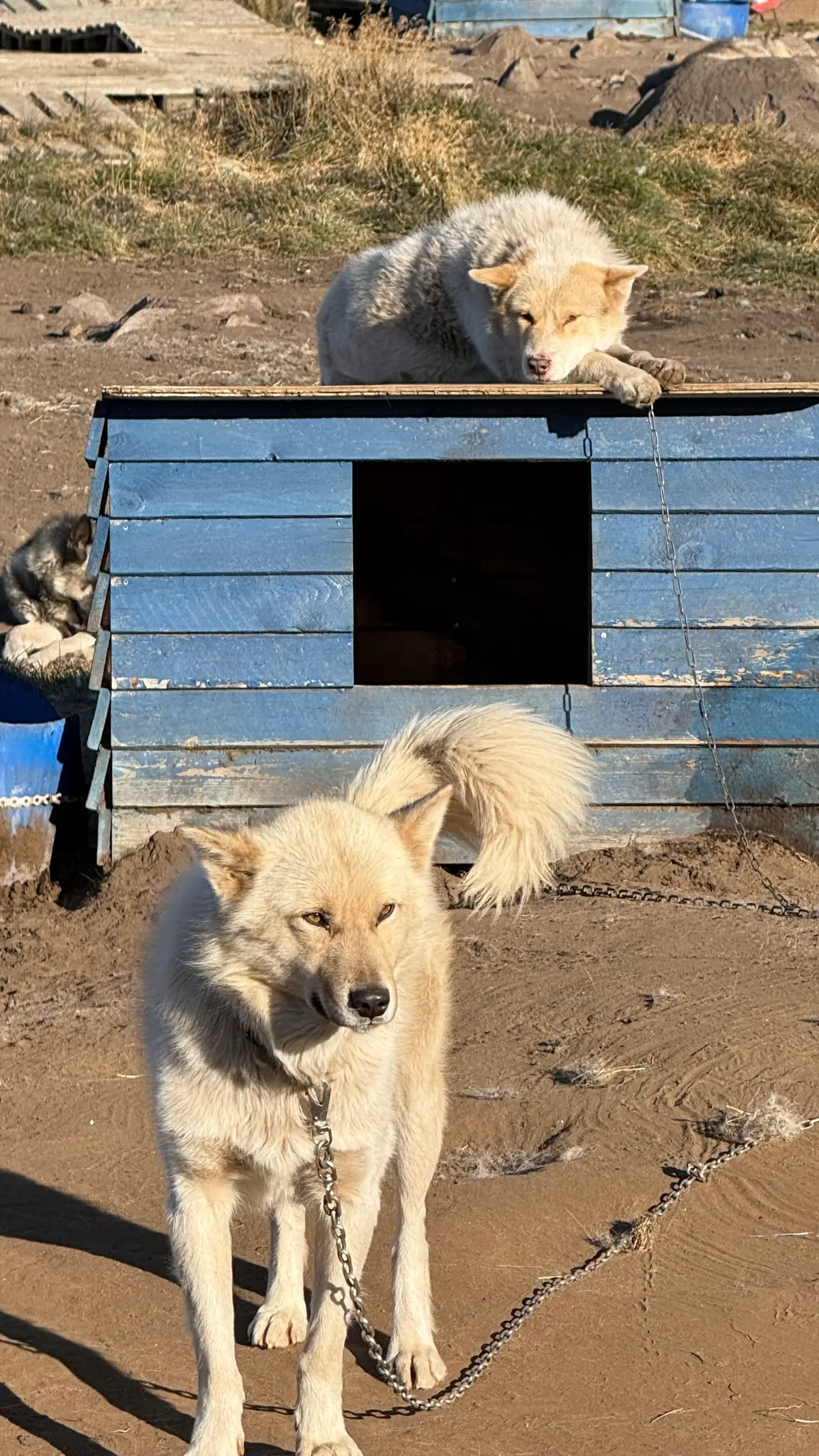
Polar bear fur is the softest and warmest pelt available for clothing. Otherwise, the typical clothing is made from seal skins and reindeer pelts. In the museums, there were displays of everyday and special clothing. The beaded tops worn by women are passed down from generation to generation. Almost every village had a small museum showcasing their historical clothing and hunting-fishing life skills necessary for survival in the Arctic tundra.
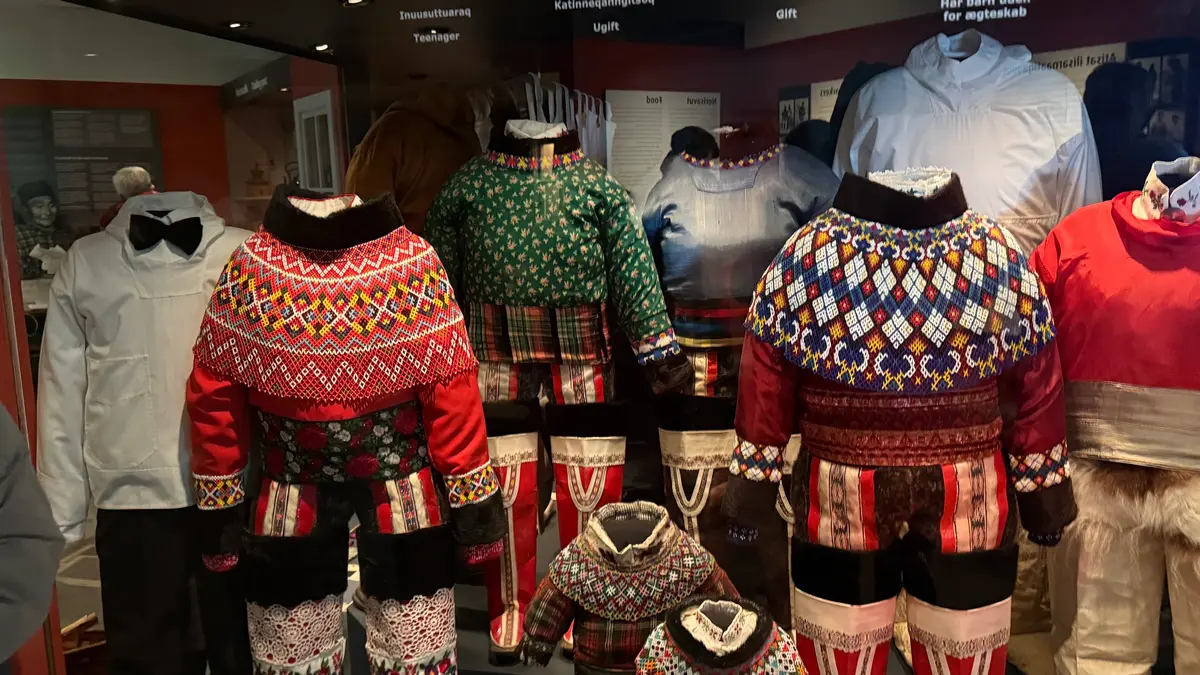
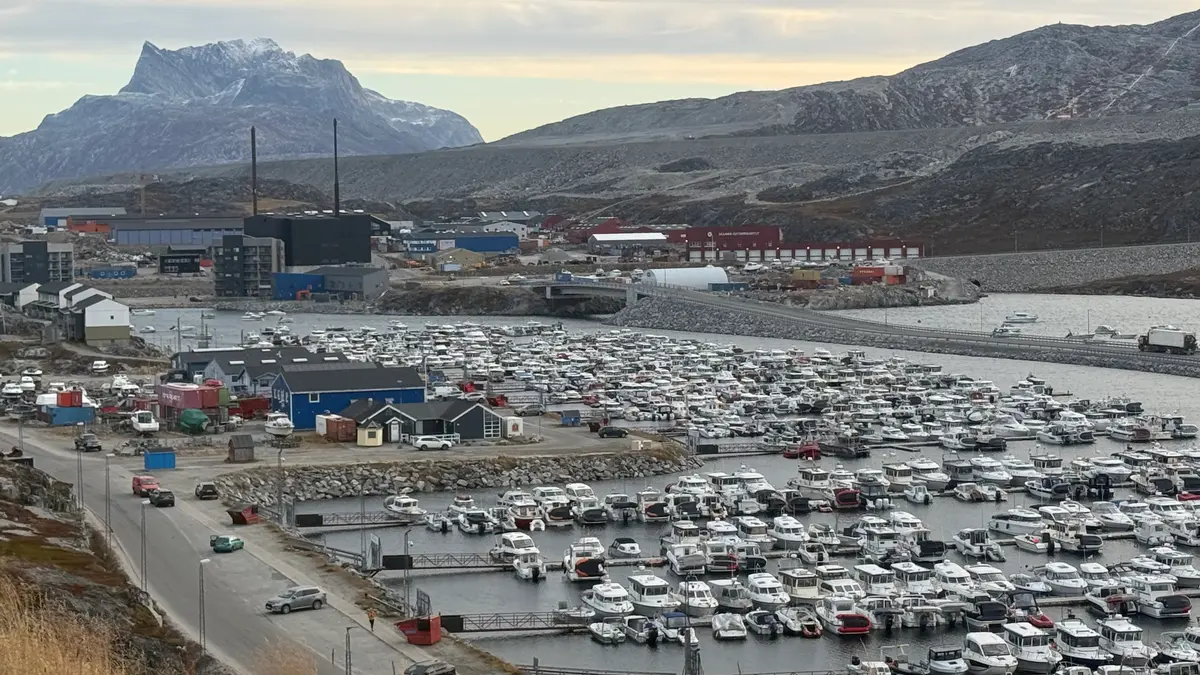
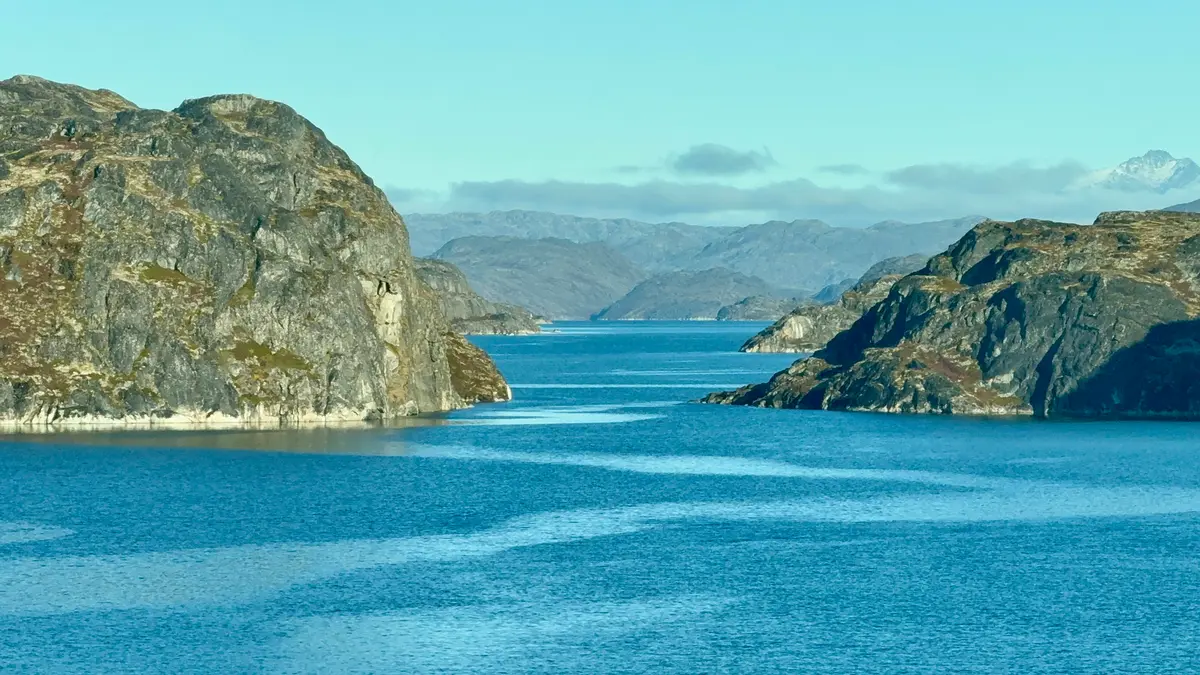
Our journey began in the capital of Greenland, Nuuk (pronounced ‘nook’). It is Greenland’s largest city with 22,000 residents. Greenland’s population is only 67,000, which is 90% Inuit and 10% of Danish and European extraction. Thus Greenland is one the most sparsely-populated areas on earth. The ice-sheet covers roughly 80% of Greenland. It averages around one mile thick, but is two miles thick at its deepest. If the Greenland ice-sheet were to totally melt, it would raise worldwide ocean levels by over thirty feet!
NUNAVUT, CANADA
After visiting three villages north on Nuuk, our ship sailed west to Nunavut, Canada. I was totally ignorant of this area. Nunavut is also home to Inuit. The languages of Canadian and Greenland Inuit have diverged, but are generally mutually intelligible.
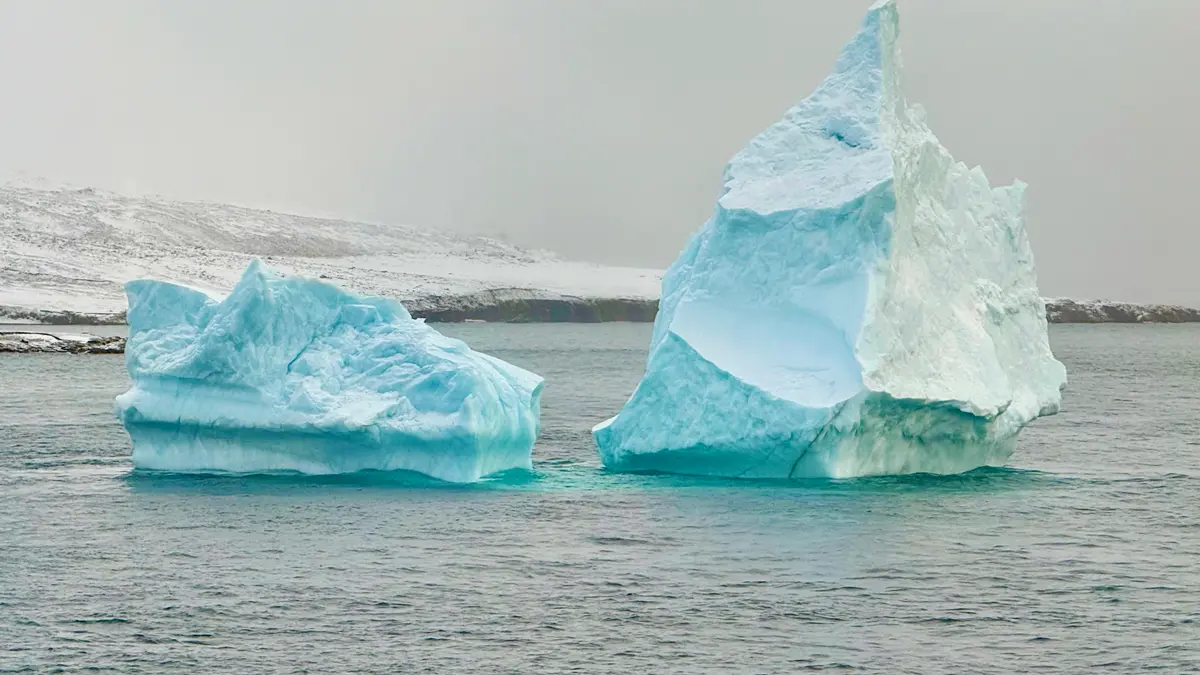
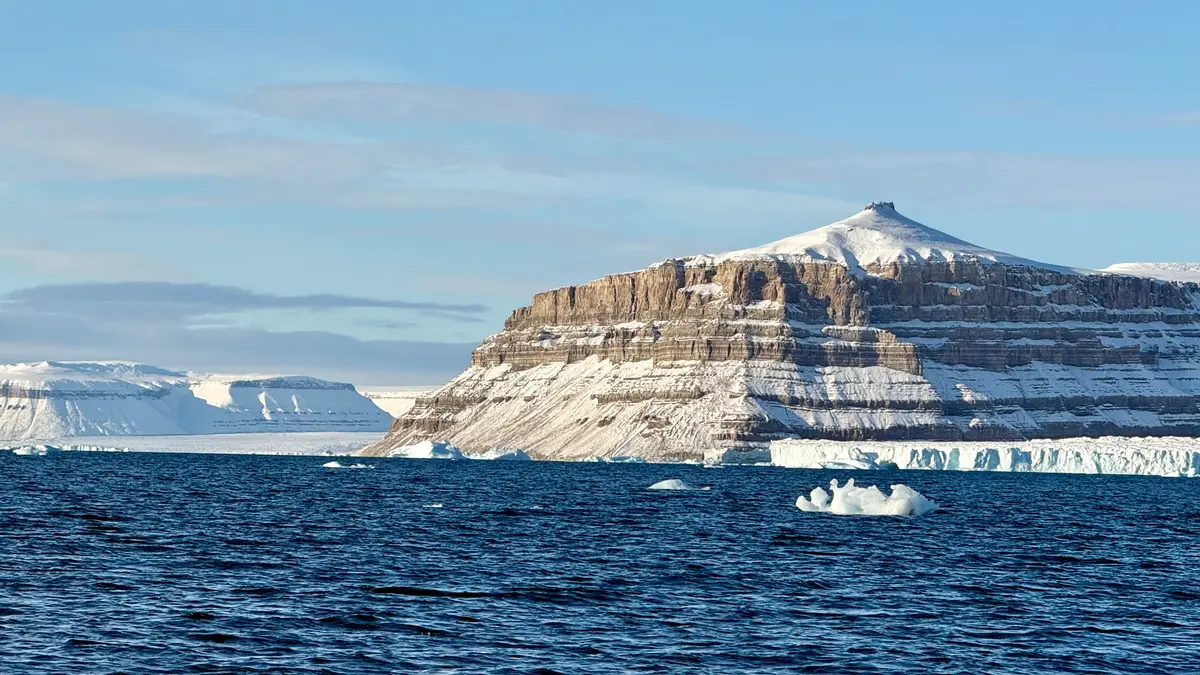
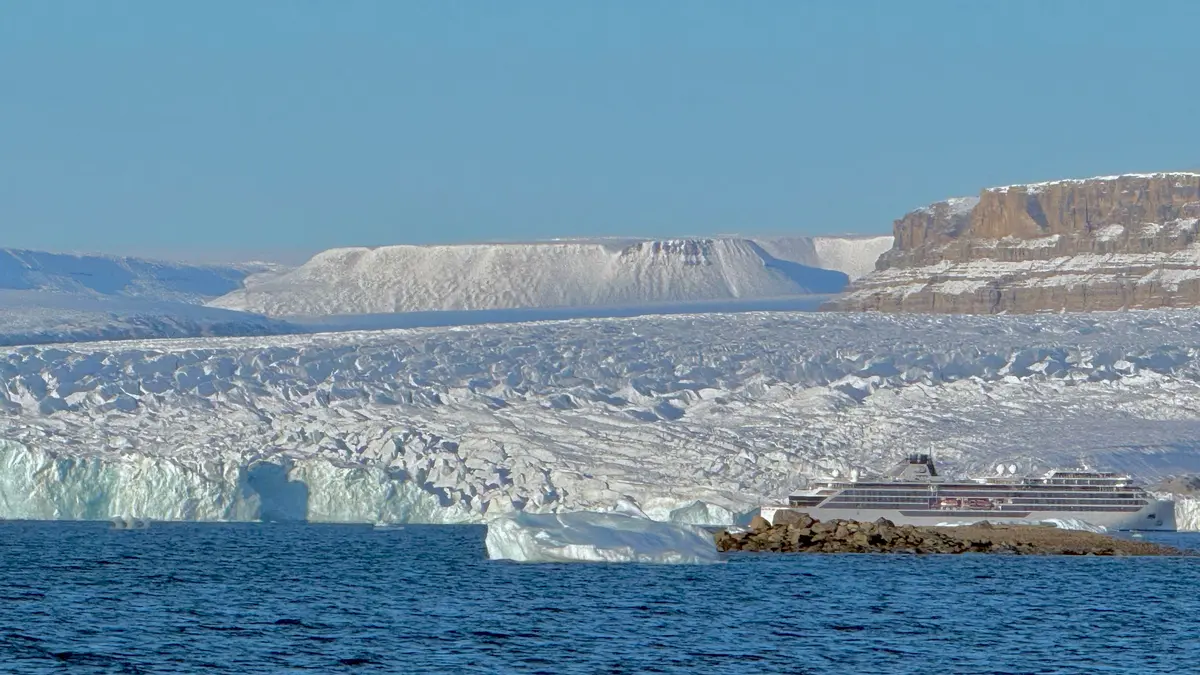
Our ship visited Devon Island, the largest uninhabited island (no permanent residents) in the world. It also has a large ice sheet that is a mile deep, though not nearly as large as Greenland’s. The Devon Island ice sheet sends glaciers into the ocean (similar to Greenland’s
ice sheet), sending many icebergs into the ocean. During our visit to Nunavut, the weather was cold and snowy. We also learned of early European explorers who sailed through the region searching for a Northwest Passage (which didn’t exist). Many explorers died in their fruitless searches.
More recently, NASA has used the cold bleak Devon Island landscape for its simulated Mars astronaut training! From Wikipedia: “The Flashline Mars Arctic Research Station project entered its third season in 2004. In July 2004, Devon Island became the temporary home for five scientists and two journalists, who were to use the Mars-like environment to simulate living and working on that planet. April 2007 through 21 August 2007 was the longest simulation period and included 20 scientific studies. Earth and Mars science research continues, with three crews and two simulated Mars missions.”
GREENLAND’S COLONIAL HISTORY
Separate from the Inuit native inhabitants, Greenland was “discovered” circa 985 by Norsemen (Scandinavians), most notably the Viking, Eric the Red. Of Norwegian extraction, Eric the Red (named for his red hair) had been banished from Iceland due to a manslaughter controversy. He found southern Greenland to be more fertile than western Iceland. He named the country Greenland in the belief that a good name would attract settlers. This is perhaps the world’s earliest example of promotion through creative labeling. He was the father of Leif Erikson, one of the first Europeans to reach North America four centuries before Christopher Columbus.
The Norwegian colonists numbered around 3,000 at their peak. But they gradually disappeared during the “mini-ice-age” from approximately 1100-1500. Beginning in the 1700’s, Denmark became the dominant foreign power in Greenland. That dominance continues today. After Inuit, Danish is the second language in Greenland, followed by English. Denmark rules Greenland as a colonial power until home-rule was granted in 1979. Under Danish colonial rule, all foreign access or tourism was forbidden. Denmark imported fish, furs, and minerals from Greenland. Today, Greenland’s main export is shrimp, most of which is bound for Asia.
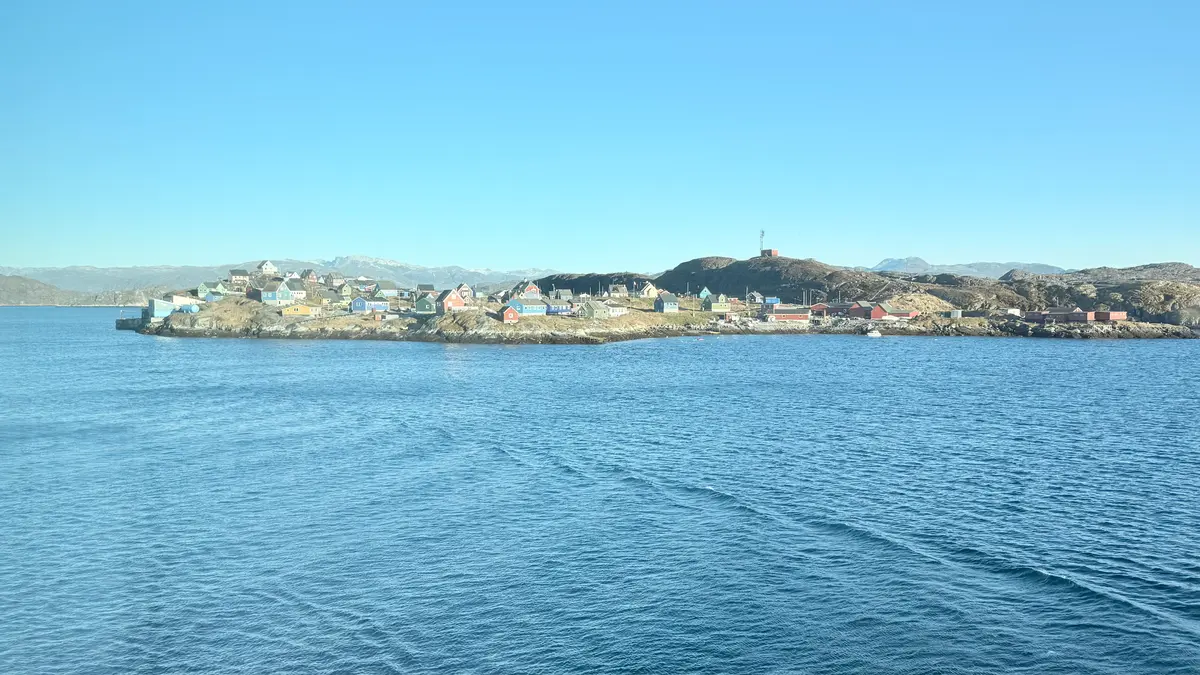
Denmark maintains control of Greenland’s foreign relations and defense. All Greenlanders have Danish citizenship. Greenland has several political parties, one of which promotes complete independence from Denmark. Trump’s threats to “take over Greenland” has resulted in increased Danish aid to Greenland and an increase in affinity with Denmark as a defense against Trump’s threats. There are T-shirts for sale with a map of Greenland and the text “Not for Sale.”
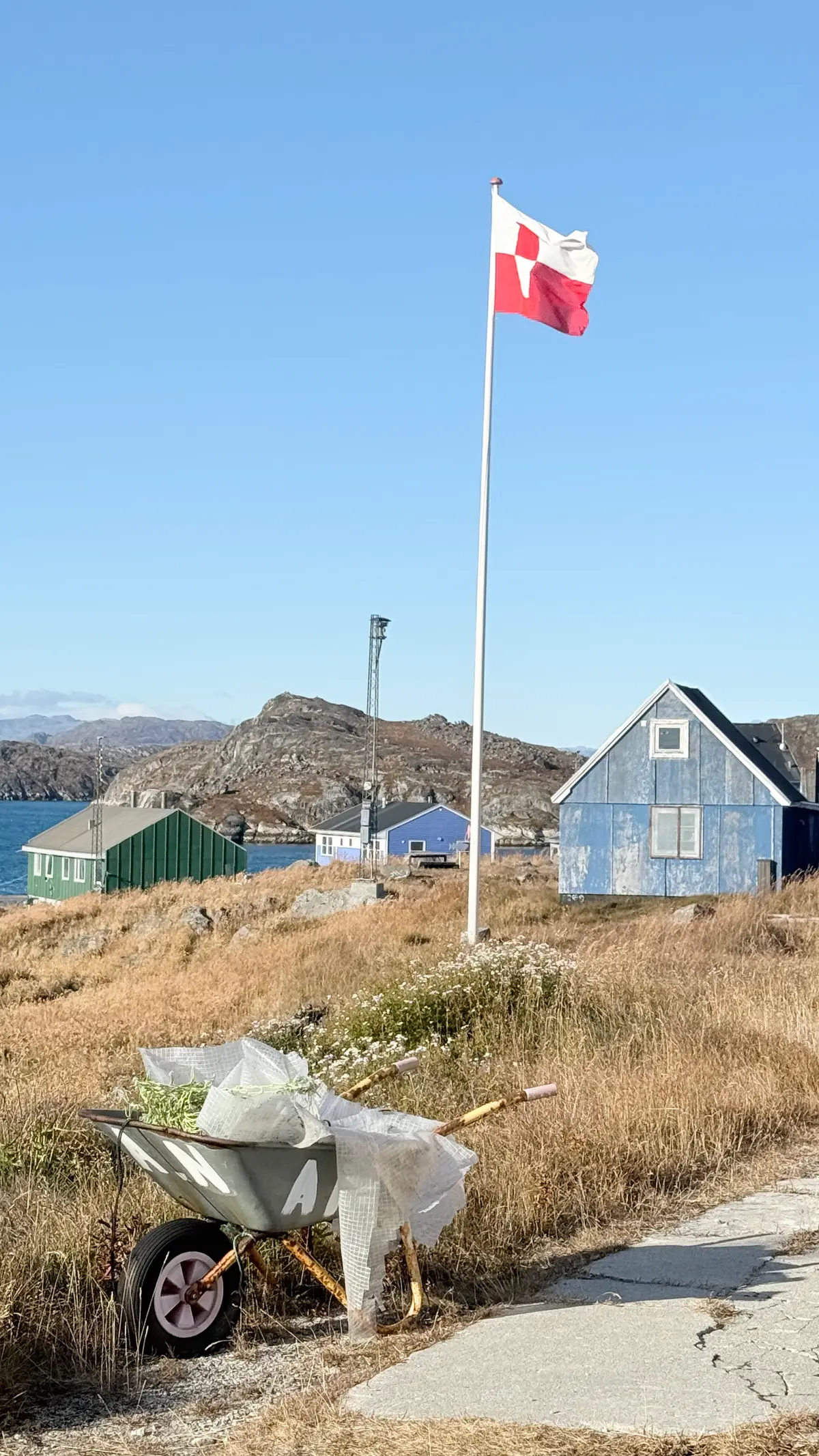
THE INUIT TRADITIONAL RELIGION
The national museum in Nuuk contained an interesting discussion of the history of Inuit traditional religious beliefs and the attempts of the Danes to Christianize them.
Inuit religion as described by AI:
Animism: Every animal, plant, rock, and weather phenomenon holds a conscious spirit deserving of deep respect.
Souls and Death: Humans are believed to have multiple soul parts (such as a life force and a breathing soul) that survive physical death and transition to an afterlife in the upper or underworld.
No Supreme Ruler: The cosmos is not governed by a central divine ruler or concepts of eternal punishment, but rather by balance, reciprocity, and the adherence to traditional taboos.
Here is my brief crude summary of Inuit traditional religious beliefs. They don’t believe in god/gods. They believe in the spiritual component of every living being as well as the sea and the land. They believe in the alignment of spirits between humans and animals. If hunters and animals are spiritually aligned, the animals “allow themselves to be harvested by hunters.”
Death causes the human spirits to rejoin the spirits in nature and the physical world. This is not like the Hindu belief of spirits being reborn in other individuals. But it is a belief in the migration of spirits among humans, animals, and places such as the sea, the land, and the sky.
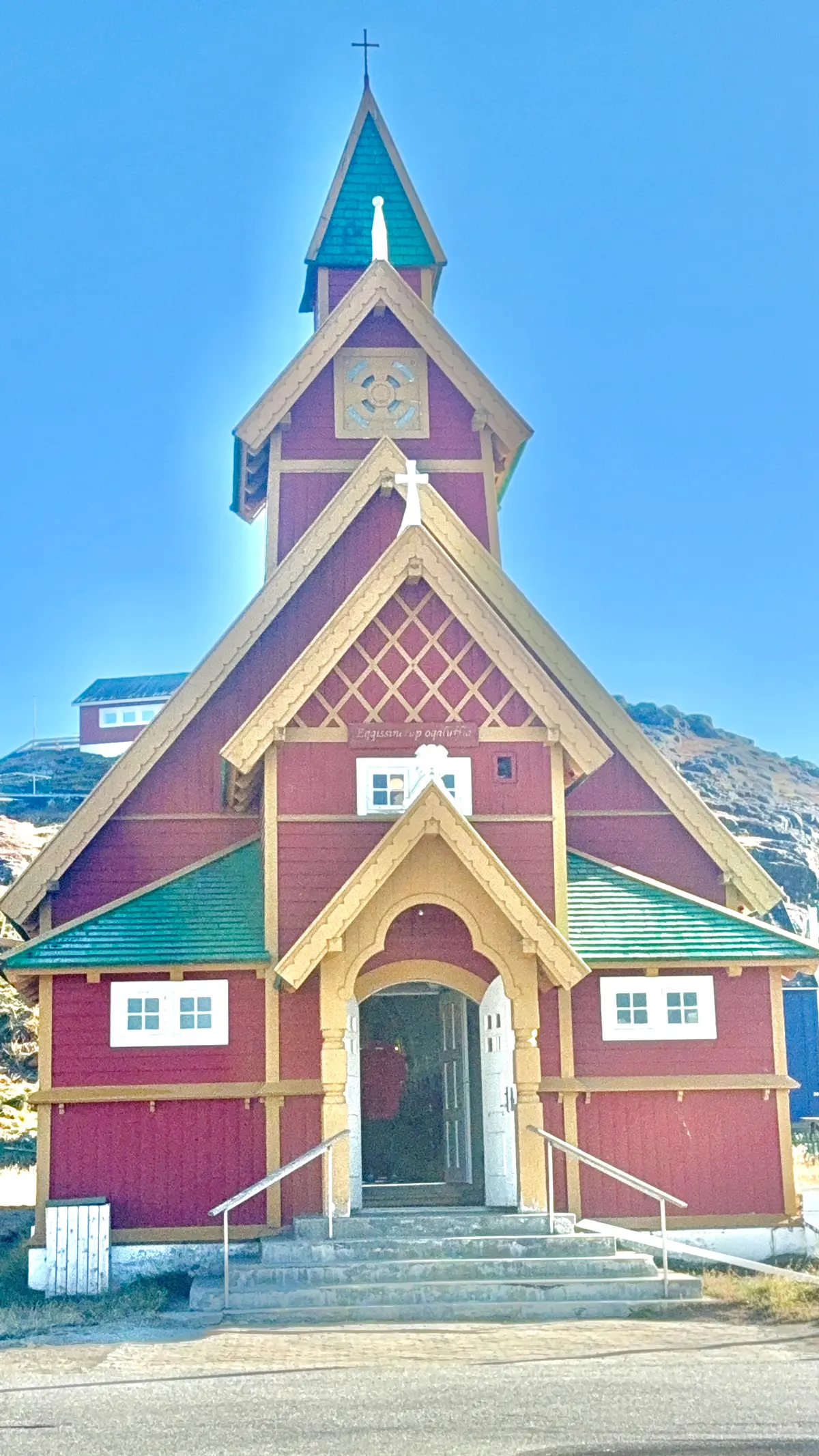
EVANGELICAL CHRISTIANITY IN GREENLAND
The Danish and Norwegian colonizers of Greenland over the centuries sought to replace Inuit religion with Christianity. There is a mythical spiritual figure in Inuit beliefs that was identified as “the devil” by the Christian proselytizers, thus condemning the core spiritual tenets of Inuit beliefs by positing Christianity as being the opposite of Inuit religion and the only true religion.
There was an interview with an Inuit man in one of the village museums. He said, “The Christians told us that if we didn’t believe in Jesus, we would go to hell. The only hell I’ve experienced is the hell created by conflicts among men. I believe in the heavenly peace that comes from being in harmony with nature and all living creatures.” Currently, the Inuit are witnessing a resurgence of their traditional religious beliefs.
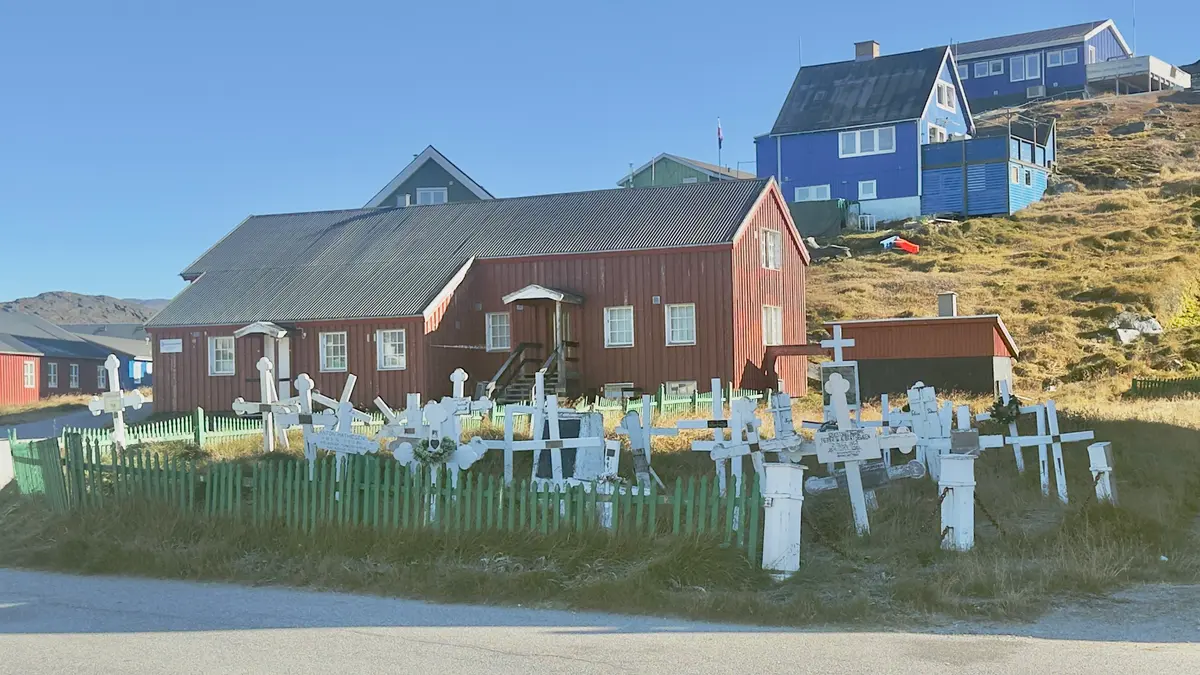
The Greenland Inuits are seeking to overcome the oppression and exploitation committed by its colonial conquerers, first the Vikings and finally the Danish. Colonial history is a shameful part of human history. The English exploited India and the Middle East, Holland exploited Indonesia and South Africa. Canada exploited and oppressed its native Northern indigenous tribes. The US treated the native American tribes brutally (not to mention chattel slavery which began in 1619).
American colonialism most recently: Trump kidnapped the president of Venezuela in order to take control of their oil, not to install a democratic government in place of the existing dictatorship. He’s recently threatened Cuba, Mexico, Columbia, and Canada with potential military action. When he threatened to takeover Greenland, Denmark sent military teams to Nuuk with explosives. They were prepared to blow up the one airport runway in Nuuk, so that American planes would be unable to land there in the event of an American military invasion.
Generally, the European colonial nations have given independence and autonomy and development aid to their former colonies. It’s no wonder that the Greenlanders don’t want to be “acquired” by the US or anyone else.
IN CONCLUSION
Greenland’s right to self-government came relatively late in 1979. However, to Denmark’s credit, they instituted the same social systems in Greenland as in Denmark: free healthcare, free education, and improved public transportation. One of our twenty-one year old Greenland guides explained that she receives $800/month and inexpensive housing from the government to pay for her university education. The $800 is for her living expenses, since the college classes are free.
After this two weeks in Greenland and Nunavut (Canada), I have a greatly increased understanding and appreciation for the Inuit and its related circumpolar tribes, for their survival under the most brutal climate on the planet. Our lives in the more temperate geographical territories of earth are much simpler and easy to manage, because we don’t have to struggle just to survive the daily weather.
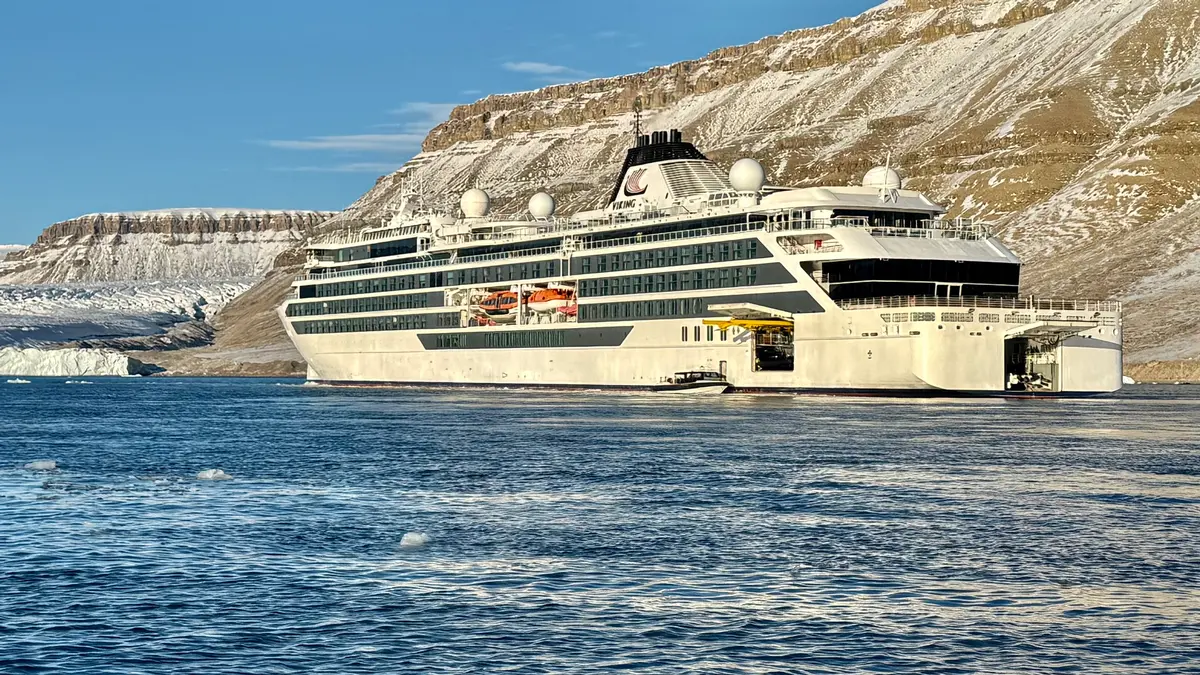
Ship doors are open for launching the Zodiac landing craft from which this photo was taken